If you make shea butter, spices, fashion, beauty products, snacks or crafts in Nigeria and you have wondered whether anyone in Nairobi, Kigali or Johannesburg would buy them, the cost of getting there has just become a lot easier to plan.
On Friday, 6 November 2026, the Federal Ministry of Industry, Trade and Investment and RwandAir signed a three-year operational roadmap for the Nigeria–East and Southern Africa Air Cargo Corridor at CANEX WKND 2026 in Lagos. After a four-month pilot, the trade minister, Dr Jumoke Oduwole, announced that the corridor is now open to every Nigerian exporter holding an AfCFTA Certificate of Origin.
This post explains what the corridor offers, what the headline rates do and do not cover, who qualifies, and how a small business can prepare its first shipment.
What the corridor is
The corridor links Lagos with five cities on RwandAir’s network: Kigali (Rwanda), Nairobi (Kenya), Johannesburg (South Africa), Harare (Zimbabwe) and Lusaka (Zambia). According to The Guardian, the first shipment under the RwandAir arrangement left on 19 June 2026, with nine exporters sending goods to four destinations. About 20 shipments have moved since then. RwandAir’s regional manager for West and Central Africa, Ginnette Kadagiri, said consignments are already moving weekly to Kenya, Rwanda and South Africa.
The airline says the scheme is aimed especially at entrepreneurs in the creative and food sectors, and at businesses that have so far sold only at home.
This is not the first corridor of its kind. Nigeria launched the same corridor with Uganda Airlines in May 2025, and RwandAir joined in 2026, adding more destinations, as CargoForwarder Global notes. We covered other new air links between East Africa and Lagos in our post on Kenya Airways’ and Uganda Airlines’ new routes.
The rates, city by city
BusinessDay reported the published rates per kilogramme:
| Destination | Rate per kg |
|---|---|
| Kigali, Rwanda | $1.40 under 1,000 kg; $1.20 for larger shipments |
| Nairobi, Kenya | $1.50 to $1.80 |
| Lusaka, Zambia | $1.50 to $1.80 |
| Harare, Zimbabwe | $1.50 to $1.80 |
| Johannesburg, South Africa | $1.70 to $1.90 |
The minister said these rates are 50 to 70 per cent cheaper than comparable commercial carriers, and that Nigerian exporters previously paid $3 to $10 per kilogramme to move goods to other African markets.
What the rate does not include
This is the part to read twice. The per-kilo rate is the airline’s freight charge only. BusinessDay reports that exporters must also pay:
- applicable minimum charges, which matter if your shipment is small;
- a $15 air waybill fee per shipment;
- cargo handling charges at the airport;
- clearance costs at both ends; and
- other statutory charges.
On top of that, your buyer will usually face import duty, VAT and local clearance in the destination country, unless your goods qualify for AfCFTA preferential rates there.
Airlines also charge on chargeable weight, which is the higher of the actual weight and the volume weight. Under the common industry standard, volume weight in kilogrammes is length × width × height in centimetres, divided by 6,000. A carton of light items such as fabric, hats or packaged snacks can be charged at more than its real weight, so pack tightly.
A simple illustration: a 300 kg shipment to Nairobi at $1.50 to $1.80 per kg comes to $450 to $540 in freight, plus the $15 air waybill fee. Handling, clearance and the other charges then come on top, and they vary with the goods and the handlers involved. Ask for an all-in quote before you agree a price with your buyer.
Who qualifies: the AfCFTA Certificate of Origin
To use the corridor rates, you need an AfCFTA Certificate of Origin issued by the Nigeria Customs Service. The certificate shows that your product is genuinely made in Nigeria under the African Continental Free Trade Area rules, so it can also unlock lower import duty in countries that are trading under the agreement.
The official Nigerian procedure, published through tralac, sets out the steps:
- Check the product first. Find the correct HS code, check the AfCFTA product-specific rule, and confirm the goods are wholly obtained or sufficiently processed in Nigeria.
- Check the destination. Use the AfCFTA tariff portal to confirm the importing country is trading your product under the agreement and that the preferential rate actually helps.
- Check product rules. Origin does not replace standards, food-safety permits, labelling or health certificates in the buyer’s country.
- Prepare your evidence. The core documents are the final invoice, packing list and transport document. Customs may also ask for a bill of materials, supplier declarations or a production description.
- Apply online through the Nigeria Trade Hub Certificate of Origin portal at coo.nigeriatradehub.gov.ng.
The same guide says certificates are currently collected at NCS headquarters, a temporary manual step while the e-certificate is being rolled out. Build that time into your plan. Our earlier guide, How Nigerian Exporters Get an AfCFTA Certificate of Origin, walks through the process in more detail.
Is the corridor right for your goods?
Air freight suits goods that are high in value for their weight, time-sensitive or perishable. Kadagiri noted that air offers shorter delivery times, security and clearer documentation, but that the choice between air and road depends on the destination and the type of goods.
Good candidates include:
- fashion, textiles and accessories for boutiques in Nairobi or Johannesburg;
- beauty and personal-care products such as shea butter, black soap and hair products, with the right labelling and permits;
- packaged foods, spices and snacks, where shelf life and food-safety certificates matter;
- art, crafts and creative products, often sold through galleries, fairs or online.
Heavy, low-value goods such as building materials usually still make more sense by sea.
Five steps before your first shipment
- Confirm a real buyer. Air cargo rates help only when someone at the other end will pay for and clear the goods. Agree the Incoterm, so it is clear who pays which charges.
- Get your origin paperwork moving early. Apply for the AfCFTA certificate before the goods are ready, not on the day you book.
- Check the destination’s import rules. Food, cosmetics and anything with health claims often need registration or permits in Kenya, South Africa, Rwanda, Zambia or Zimbabwe.
- Pack for air. Use strong, uniform cartons, label every one clearly, and keep weights and dimensions accurate on your packing list.
- Ask for an all-in quote. Make sure it covers freight, the air waybill fee, handling, export clearance and delivery to the airport, so your price to the buyer holds.
What to watch next
The roadmap runs for three years. During that time, Nigeria and Rwanda say they will look at further “mutually beneficial” cargo rates and work on distribution problems at destination, and the ministry plans to bring RwandAir into its AfCFTA training programmes for exporters. The total volume and value of goods moved so far have not been published, so it is too early to judge how much capacity is available on each route.
Nigeria’s non-oil exports reached $6.1 billion in 2025, up 11.5 per cent on 2024, according to the minister. Lower freight costs to East and Southern Africa give small exporters one more route to grow that number, if their paperwork and packaging are ready.
The bottom line
The RwandAir corridor turns air freight to five African cities from an expensive gamble into a cost a small business can plan for, as long as you hold an AfCFTA Certificate of Origin and budget for the charges beyond the per-kilo rate.
At Septmax Logistics, we help businesses and individuals move goods out of Nigeria by air and sea, including export documentation, cargo preparation and delivery to the airport. If you are planning your first shipment to Kenya, Rwanda, South Africa, Zambia or Zimbabwe and want help with costs or paperwork, call our team on +234-707-476-0270 or email logistics@septmax.com.
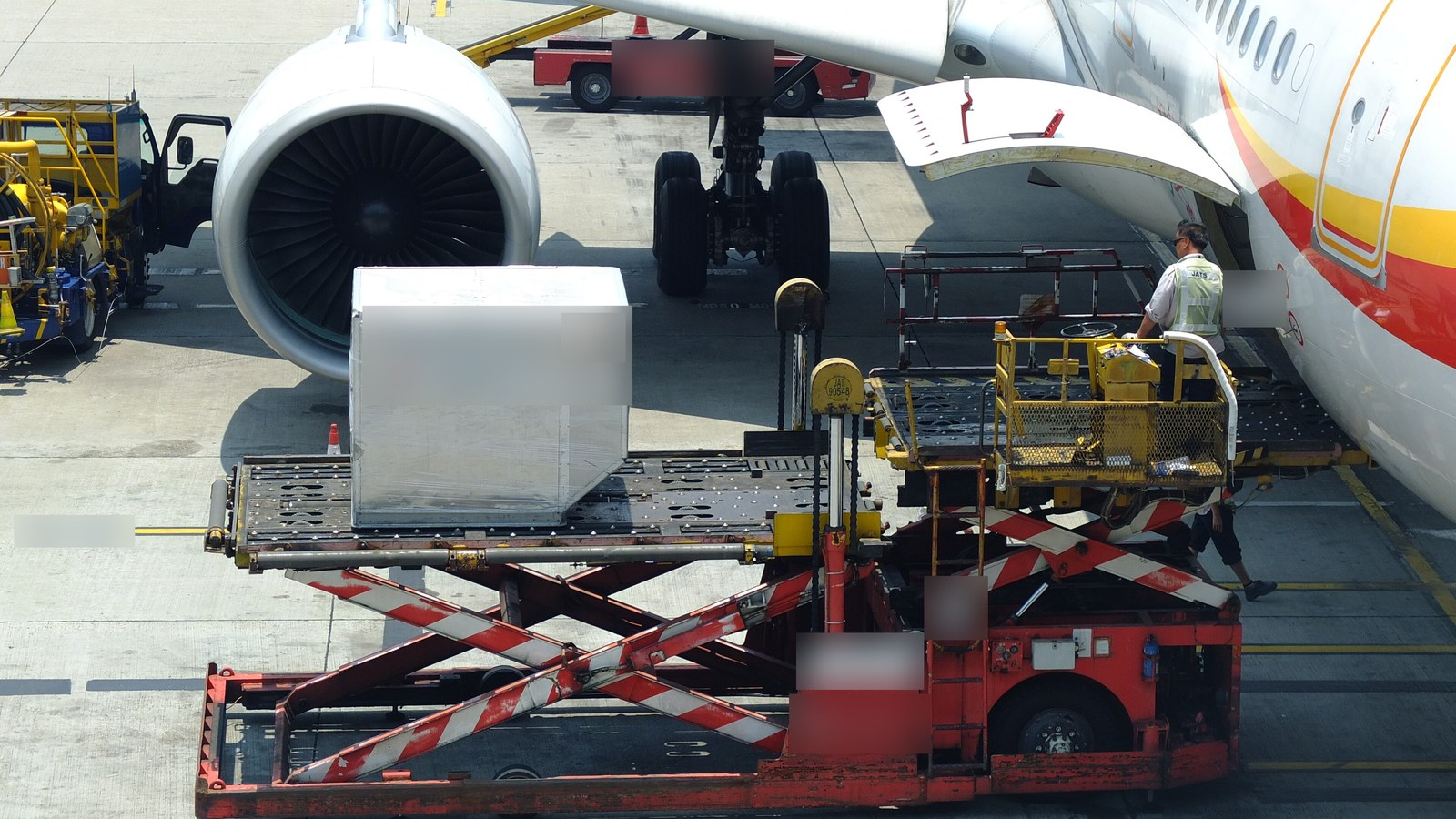
Featured photo: “Aircraft cargo (ULD) loader in operation” by Jamesshliu, Wikimedia Commons, CC BY-SA 3.0, cropped and with markings blurred.