Thinking of bringing in a car through Lagos before the end of the year? One of the main vehicle terminals at Tin Can Island has just reminded agents and importers that small paperwork slips can hold a car at the port. At the same time, the 2026 duty changes have made the customs bill on many vehicles lighter than it was a year ago. Here is what changed, what it means for you, and a simple checklist to keep your car moving.
What PTML Customs announced
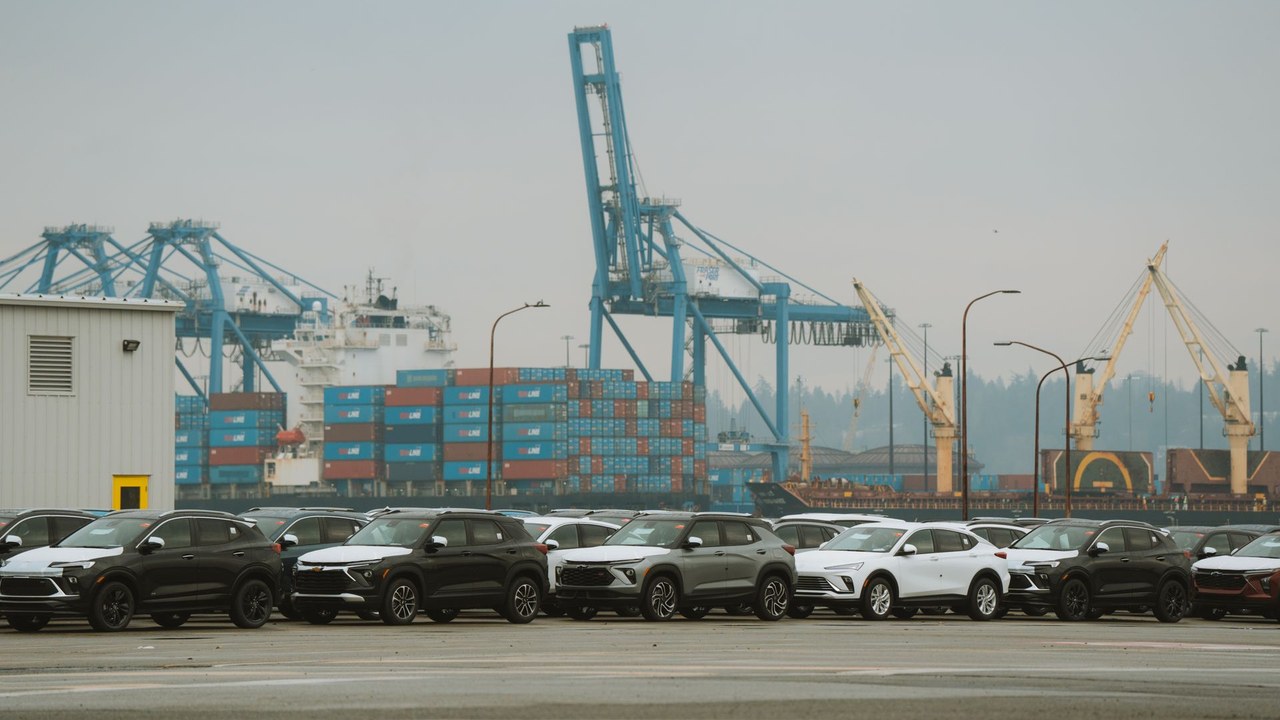
Port and Terminal Multi-services Limited (PTML) runs a dedicated roll-on/roll-off (RoRo) and multipurpose terminal at the western end of the Tin Can Island port complex, and it handles a large share of the cars shipped into Nigeria by Grimaldi vessels. The Nigeria Customs Service has its own command inside the terminal.
At a stakeholders’ meeting on Friday, 16 October 2026, the PTML Customs Area Controller, Deputy Comptroller Nura Ibrahim Miko, and the PTML chapter of the Association of Nigeria Licensed Customs Agents (ANLCA) agreed three rules, according to a statement reported by PortNews Nigeria and The Guardian:
- No chassis number alteration, “under any circumstances”. The chassis number (the vehicle identification number, or VIN) must stay accurate and identical through documentation, assessment, examination and clearance.
- One agency name from start to finish. Every document submitted for clearance must carry the same clearing agency name from the VREG stage through to final delivery. VREG is Customs’ online vehicle registration step, where each imported vehicle is registered by its VIN before duty is assessed.
- No cross-releasing. Agents must confirm the shade or yard location of the consignment before starting assessment. If the car is sitting in a different shade from the one expected, the agent should go to the Port Authority office for reassignment, which is free, instead of releasing it from the wrong location.
ANLCA warned that ignoring the directives could lead to delays, extra costs and other sanctions, and asked members, importers, punchers (the staff who key in declarations) and other port users to comply.
Why this matters to you as a car buyer
Most clearance delays on cars are not about the duty itself. They come from mismatches: a VIN typed with one wrong character, an agent change halfway through the process, or a car physically parked somewhere different from where the paperwork says it is. Under these rules, each of those becomes a stop rather than something that can be “fixed” at the gate.
Every extra day matters. In September, clearing agents and dealers told Nairametrics that storage, handling and financing costs pile up for each day a vehicle stays in a terminal, and that this is a big reason some importers still route cars through Cotonou. The same report quoted Vice President Kashim Shettima as saying cargo dwell time at Nigeria’s major ports averages 18 to 21 days, against about four days at Cotonou.
The good news: duties on cars are lower in 2026
The 2026 Fiscal Policy Measures cut the effective tariff on fully built passenger cars, four-wheel drives and station wagons from 70% to 40% from 1 April 2026, as reported by BusinessDay. From 1 July, the National Automotive Council (NAC) levy also fell from 15% to 5% for used cars and from 20% to 10% for new cars, which the Comptroller-General of Customs confirmed to lawmakers (Vanguard).
A new Green Tax came in at the same time: 2% on engines from 2,000cc to 3,999cc and 4% on 4,000cc and above. Electric vehicles, mass-transit buses and locally made vehicles are exempt (BusinessDay explainer).
According to BusinessDay’s 2026 car import guide, a typical customs bill on a car is built up like this:
- Import duty of 20% on the CIF value (cost of the car plus freight and insurance)
- Surcharge of 7% of the import duty
- NAC levy of 5% (used) or 10% (new)
- Green Tax of 2% or 4%, depending on engine size
- A 0.5% ECOWAS levy and a 4% FOB-based charge for importers not under Chapter 99
- VAT of 7.5%, charged on the combined total rather than on the CIF value alone
Treat this as a guide, not a quote. Customs values vehicles using its own reference values, and the exchange rate on the day duty is assessed, not the day you bought the car, decides the naira figure. Vehicle imports were already rising before the cuts fully took effect: the Nigerian Ports Authority recorded an 18.3% year-on-year increase in the second quarter of 2026.
Your checklist before the car lands
1. Get the VIN right on day one. Copy it from the vehicle itself or the export title, not from a seller’s advert, and check it matches the bill of lading, invoice and title exactly. One wrong digit on VREG can mean a query later.
2. Pick your clearing agent before VREG and stick with them. Because the agency name must be the same from VREG to delivery, changing agents mid-way invites delays. Check the agent is licensed, and if they are a freight forwarder, confirm they are registered with CRFFN.
3. Ask where the car is parked. Before assessment starts, your agent should confirm the shade or yard location at PTML. If it is in the wrong place, the fix is a free reassignment, not a cross-release.
4. Budget for more than duty. Add terminal handling, storage, agent fees, any shipping line charges and transport from the port. Ask your agent for a written breakdown and how many free storage days apply.
5. Never accept a “fix” on the chassis number. If anyone offers to adjust a VIN, walk away. It is banned at PTML, and a tampered VIN can also cause trouble later at vehicle registration or resale.
6. Check engine size against the Green Tax bands. A 3.5-litre SUV and a 4.0-litre SUV can look similar online, but they fall into different bands.
The bottom line
Cheaper duties make 2026 a better year to import a car than 2025, but the savings disappear quickly if the car sits at the port. PTML’s message is simple: one VIN, one agent name, one correct location. Get those three right and your clearance has a much better chance of going smoothly.
Need help clearing a car?
Septmax Logistics handles shipping, customs clearance and delivery for vehicles and other cargo into Nigeria, including from China. To get a clear breakdown of costs before your car arrives, call +234-707-476-0270 or email logistics@septmax.com.