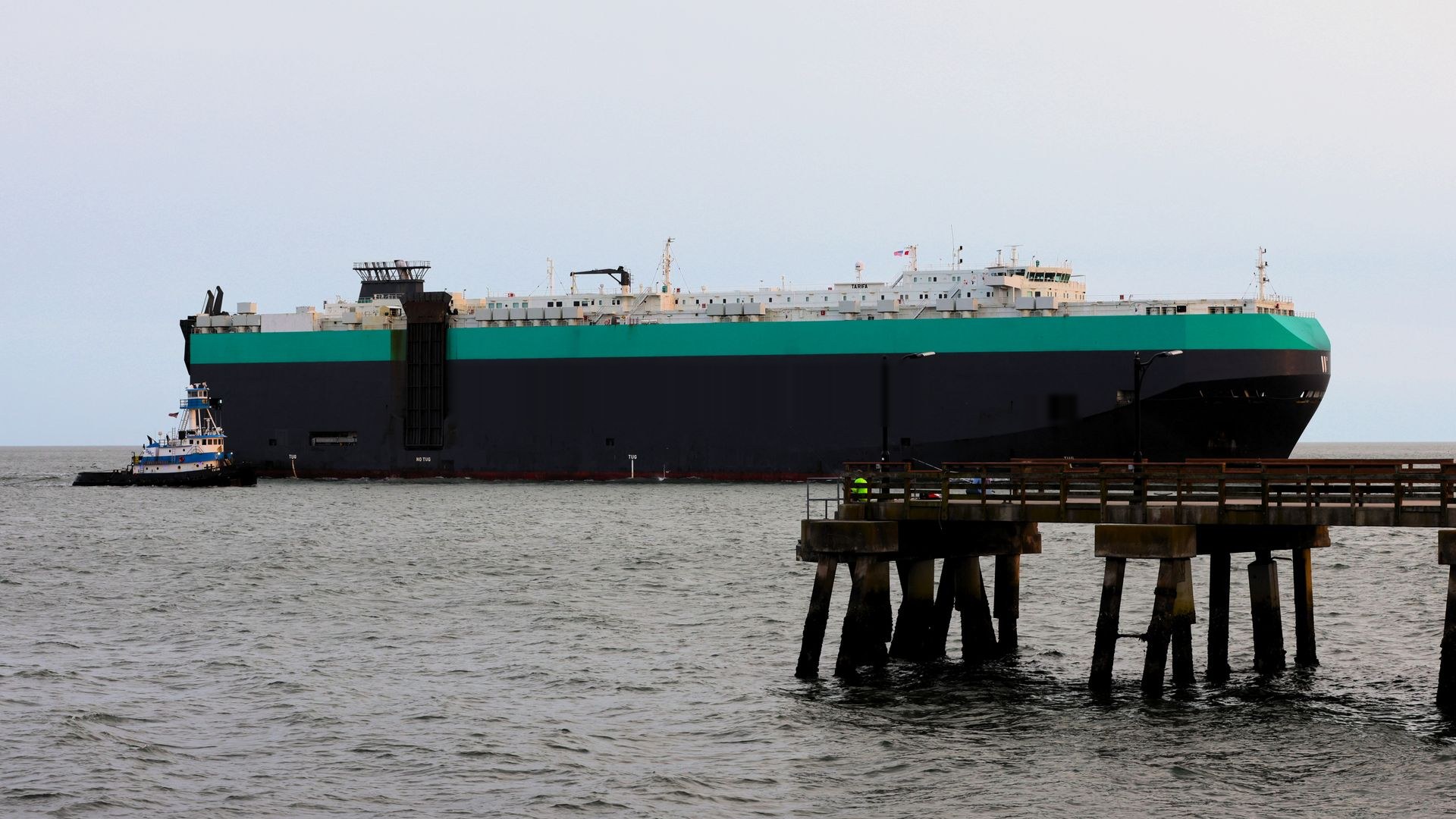
If you are buying a car abroad, or bringing in a tractor, generator truck or piece of construction equipment, one of the first questions your forwarder will ask is: RoRo or container? West Africa has just gained another RoRo option, so it is a good time to look at how the two compare.
What happened: NYK’s new vehicle service
Japanese carrier NYK Line has started a roll-on/roll-off (RoRo) service into West Africa. Its vehicle carrier, the 183-metre Neptune Leader, made a maiden call at Ghana’s Port of Tema in late October, as shared by the Port of Tema. AGL, NYK’s agent, said the call followed more than a year of feasibility studies, and NYK said it plans to add destinations and increase how often it calls from 2027.
The same ship then called at Abidjan on 24 October, where 139 vehicles were unloaded in less than 24 hours at the RoRo terminal run by TERRA. The Port of Abidjan says that terminal has a 37,500 square metre vehicle yard and a warehouse for new vehicles. The operators did not say how often the ship will call or where the vehicles came from.
An NYK RoRo schedule published by one of its booking agents lists Lagos, Tema and Abidjan among the ports on its Japan–Africa route. Schedules change often, so always confirm the next sailing with your forwarder before you buy.
RoRo and container: the basic difference
RoRo ships work like floating car parks. Vehicles are driven up a ramp into the ship and driven off at the destination port. No crane lifts them and there is no container.
Container shipping means the vehicle is loaded into a 20ft or 40ft container, usually braced or strapped to the floor, and the box is lifted on and off the ship like any other container.
Both are common for cars coming into Nigeria, Ghana and the rest of the region. Neither is always better. It depends on what you are shipping and what matters most to you.
When RoRo usually makes sense
- You are shipping one ordinary car or SUV. RoRo is often the cheaper option for a single vehicle, because you pay for the space the vehicle takes rather than a whole container.
- The vehicle is large or tall. Trucks, buses, tractors, excavators and other wheeled or tracked machines that will not fit in a standard container can often go RoRo as rolling cargo.
- You want a simple handover. The vehicle is delivered to the terminal at origin and collected at the terminal at destination.
- Speed off the ship matters. As the Abidjan call shows, a RoRo ship can discharge many vehicles in a day, with no container to strip afterwards.
Points to watch with RoRo:
- Most carriers do not allow personal items or loose goods inside the vehicle. Ask your carrier for its exact rules before you load anything.
- The vehicle usually needs to start, drive and brake. A car that does not run may cost more or need to go on a flat rack.
- Vehicles are handled by drivers at several points, so take dated photos of the condition at hand-over and keep spare keys separate.
When a container usually makes sense
- You are shipping more than one vehicle. A 40ft container can often take two or more cars with the right racking, which can bring the cost per car down.
- The vehicle is valuable, classic or fragile. A sealed container gives more protection from weather, knocks and tampering.
- You need to ship parts or equipment with it. Spare tyres, parts or accessories can travel in the same container, as long as every item is on the packing list and declared to Customs.
- Your destination port has no regular RoRo call. Container services reach many more ports than RoRo services do.
Points to watch with containers:
- You will pay for container handling, unstuffing and the return of the empty box, on top of freight.
- Demurrage and storage charges can build up if clearance is slow, so line up your documents before the ship arrives.
- Anything undeclared inside the container can lead to seizure or penalties at the destination port.
Documents you will need either way
Whichever method you choose, the paperwork is broadly the same:
- Proof of ownership, such as the original title or registration certificate and the purchase invoice.
- The bill of lading, which must show the correct chassis number (VIN), make, model and year.
- Export clearance at origin, which your seller or forwarder normally handles.
- Import documents for the destination country. In Nigeria that includes Form M through an authorised bank and vehicle registration on the Customs system before duty is assessed.
- Insurance. Marine cargo cover protects you if the vehicle is lost or damaged on the way. It is worth having for both RoRo and container shipments.
Make sure the VIN is exactly the same on every document. Nigeria’s PTML Customs Command, which handles many of the cars that come in through Lagos, has banned any change to chassis numbers and wants the same clearing agency name on the file from registration to delivery.
Check the rules and the costs before you buy
Every country has its own rules on the age and condition of imported vehicles, and these change from time to time. Check them for Nigeria, Ghana, Côte d’Ivoire or wherever the vehicle is going before you pay the seller, not after it has sailed.
Budget for duty and levies too. Under Nigeria’s 2026 fiscal policy measures, the Nigeria Customs Service applies a green tax surcharge to motor vehicles with engines of 2,000cc and above. Ask your clearing agent for a full estimate of duty, levies, port charges and delivery so there are no surprises.
A quick checklist
- Decide what matters most: lowest cost, maximum protection, or shipping other goods with the vehicle.
- Ask your forwarder for both a RoRo and a container quote, with all origin and destination charges included.
- Confirm the next sailing and the transit time, not just the price.
- Check the vehicle’s age and condition against the destination country’s rules.
- Match the VIN on the invoice, title, bill of lading and import documents.
- Photograph the vehicle at hand-over and keep copies of everything.
- Arrange insurance and choose your clearing agent before the ship sails.
How Septmax can help
Septmax Logistics helps individuals, dealers and businesses ship vehicles, machinery and general cargo into Nigeria, with freight forwarding, customs clearance and delivery to your door. We can compare RoRo and container options for your vehicle, check your documents before loading and handle clearance when it lands. Contact our team for a quote before you buy, and we will help you work out the full landed cost.