Air freight is supposed to be the fast option. You pay more per kilo so your goods arrive in days, not weeks. But this month, at one of Asia’s busiest cargo airports, shipments that should be released within 24 hours have been sitting for days, and in some cases weeks.
The problem is at Thai Airways’ cargo warehouse at Bangkok Suvarnabhumi Airport in Thailand. What started as an import backlog has now spread to exports, and other airlines have started limiting the freight they will carry into Bangkok. It is a useful case study for anyone who ships by air, works in an airline or ground-handling cargo shed, or buys goods from Asia, including traders and businesses here in Nigeria.
This post explains what happened, why one jammed warehouse can disrupt flights far beyond it, and what shippers and cargo staff can learn from it.
What is happening in Bangkok
According to reports in The Loadstar, Nation Thailand, the Bangkok Post and Thaiger, the key facts are:
- A big backlog, with no official count. Accounts circulating among airlines in early November put the backlog at more than 1,000 cargo lots awaiting release and about 700 to 800 pallets waiting to be unpacked. Neither Thai Airways nor Airports of Thailand (AOT) has confirmed those figures or given a recovery date.
- It started with flooding. Thaiger reports that the trouble began in late September, when flooding in Bangkok left Thai Airways short of staff, and the airline stopped accepting cargo at its Suvarnabhumi warehouse from 30 September to 6 October. Some goods that landed on 10 October were reportedly still stuck in early November.
- Cargo that could not be found. The Thai Airfreight Forwarders Association said missing or inaccurate storage records meant agents could not tell when shipments would be ready. It said the AOT Cargo Clearhouse system was not showing shipment status and storage locations correctly, which stopped forwarders and customs brokers from paying for and releasing consignments.
- Exports are now affected. Because unpacked cargo was still sitting on airline containers and pallets, those units were not available for outbound flights. The Bangkok Post reports that Singapore Airlines Cargo temporarily restricted some cargo types at Suvarnabhumi from 4 November for this reason.
- Airlines are limiting inbound freight. Cathay Cargo has restricted Bangkok-bound freight until at least 15 November, accepting only intact units that can be released without being unpacked at destination, with exemptions for some temperature-controlled and special cargo. Logistics firm Expeditors reported that Thai Airways had earlier asked airlines to cut inbound cargo by 50% through 7 November.
The Thai Chamber of Commerce has warned that the delays are raising costs for importers, forwarders, customs brokers and manufacturers that rely on imported raw materials and components, and are disrupting production schedules.
Why one warehouse can jam a whole network
To understand why this spread so fast, it helps to know how air cargo moves.
Most air freight on wide-body aircraft travels in unit load devices (ULDs): the shaped metal containers and flat pallets with nets that fit into an aircraft’s hold. When a flight lands, its ULDs go to the cargo warehouse, where staff “break them down”, meaning they unpack the cargo, check it, record where each shipment is stored, and make it available for customs clearance and collection.
That breakdown step is the bottleneck. If it falls behind:
- Import cargo piles up inside the ULDs, so consignees cannot collect it.
- The ULDs themselves are stuck. Airlines own a limited pool of containers and pallets. If they are full of uncollected imports in Bangkok, they cannot be used to build up export loads in Bangkok or elsewhere.
- Export handling slows. Expeditors reported longer queues for weighing and export handover at Suvarnabhumi, as import delays ate into warehouse space and staff time.
- Other airlines step in to protect themselves. Cathay’s rule of accepting only intact ULDs is a way to avoid adding more loose cargo to a warehouse that cannot unpack what it already has.
The other lesson is about information. A warehouse can hold a shipment and still lose it if nobody recorded where it was put. In Bangkok, poor location records turned a capacity problem into a search problem.
What Thai authorities are doing about it
Thai Airways apologised on 5 November and said it had been adding staff, forklifts and equipment since 1 November. Nation Thailand reports it is installing 100 more Wi-Fi access points in the warehouse and an app to scan and record cargo locations in real time, and it plans a full warehouse management system covering every stage from arrival to release. It is prioritising shipments that arrived before 23 October while still handling new arrivals.
AOT has given Thai Airways use of Warehouse 4 in the airport’s free zone for oversized cargo, and is discussing with the airline and Thai Customs whether domestic warehouse space could be used for international imports. It also says it is linking the airline’s cargo tags to its own tracking platform.
What it means for shippers and buyers outside Thailand
If you buy electronics, parts, machinery spares or other goods from Thailand, or your shipment transits Bangkok, here is what to do:
- Ask your forwarder how your cargo is routed. Not every flight into or out of Bangkok uses the same warehouse. Ask which airline and handler your shipment will go through, and whether a different airline or routing is available.
- Build in extra days. Until the backlog clears, do not plan production or sales around a normal 24-hour release at destination or a normal export handover at origin.
- Get your supplier to book early. Export queues at the airport mean late bookings are more likely to miss flights. Ask your supplier to hand cargo over earlier than usual.
- Check documents before departure. When a warehouse is overloaded, any document error adds to the delay. Make sure the air waybill, commercial invoice and packing list agree on pieces, weight and description.
- Track the shipment, not just the flight. A flight can land on time while the cargo sits for days. Ask for warehouse status updates, not only flight details.
- Plan around storage costs. Delays at a warehouse can lead to storage or handling charges. Ask your forwarder or agent who pays if cargo is held through no fault of yours, before you need to.
Lessons for cargo shed staff and ground handlers
For people working in airline cargo, ground handling and airport warehouses, including at Lagos, Abuja and other Nigerian airports, Bangkok shows what to watch:
- Location records matter as much as space. The Thai Chamber of Commerce proposed sorting cargo by airline, speeding up ULD breakdown, giving every shipment a clearly identified storage location and keeping the tracking system up to date. Each of those is a daily discipline, not a crisis measure.
- Breakdown speed protects exports. Every ULD left full of uncollected imports is one fewer unit for an outbound flight.
- Plan for staff shortfalls. Bangkok’s problem began when flooding cut staff numbers. Contingency plans for weather, public holidays and peak season help stop a short disruption from turning into a two-month backlog.
- Communicate early. Forwarders said they could not tell their customers when shipments would be ready. Clear status updates reduce phone calls, repeat visits and congestion at the warehouse gate.
Peak season is the worst time for this kind of failure. Cargo volumes usually rise towards the end of the year, so any warehouse that is already near its limit has little room to recover.
What to watch next
- Whether Cathay extends its restriction beyond 15 November, or other airlines add their own.
- An official backlog figure and recovery date from Thai Airways or AOT.
- Whether export handling returns to normal once more ULDs are freed up.
How Septmax can help
Septmax Logistics arranges air and ocean freight into and out of Nigeria, along with customs clearance and door-to-door delivery. If you are buying from Asia and want to know the best routing, how long to allow, or what documents to get right before your cargo flies, talk to us before you book. Call +234-707-476-0270, email logistics@septmax.com, or visit our office at 31, Murtala Muhammed International Airport Road, by 7 & 8 Bus-stop, Ajao Estate, Isolo, Lagos.
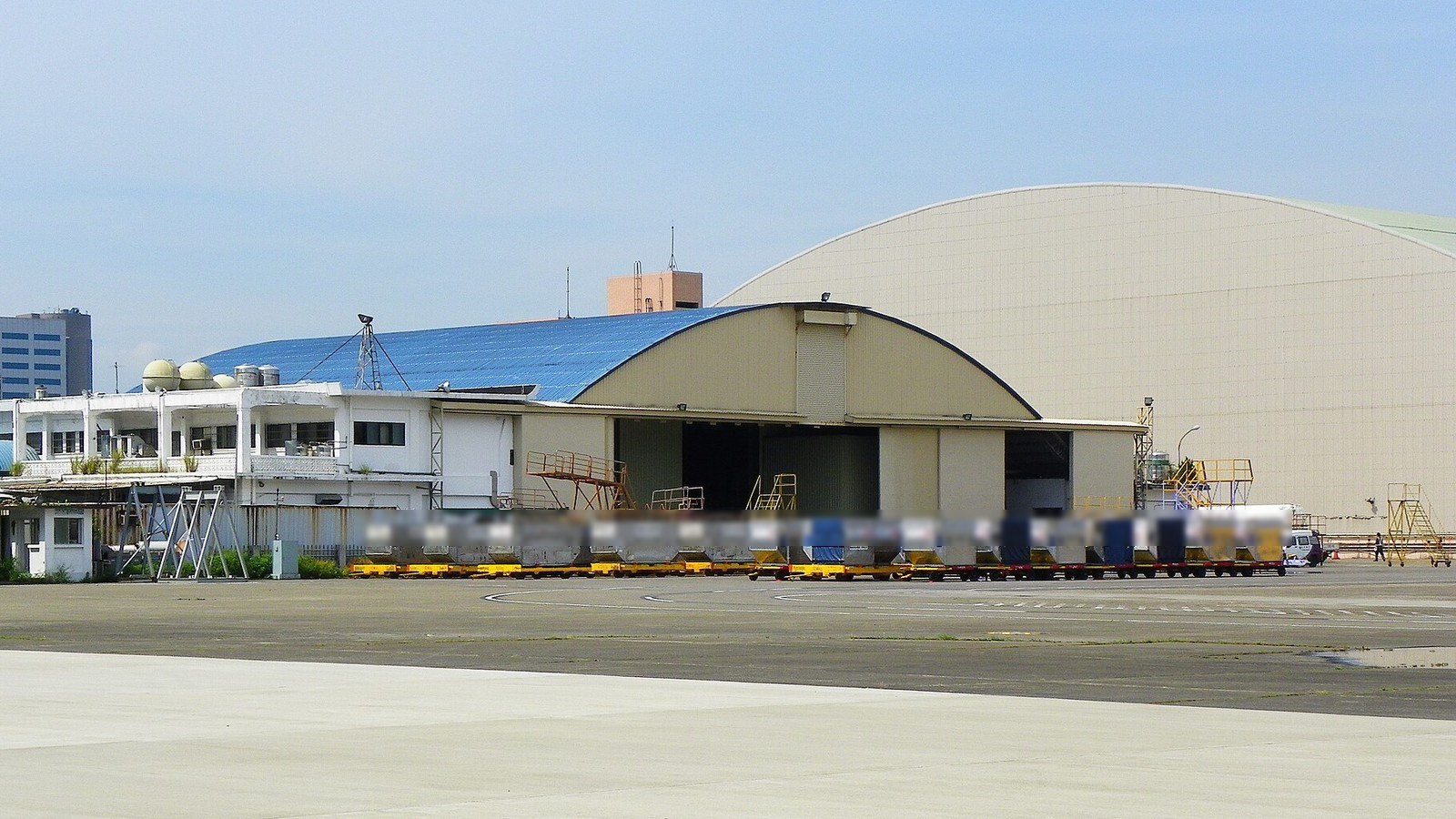
Featured image: air cargo containers lined up outside a cargo warehouse at Taipei Songshan Airport, by 玄史生, via Wikimedia Commons, CC BY-SA 3.0 (cropped and lightly edited).