
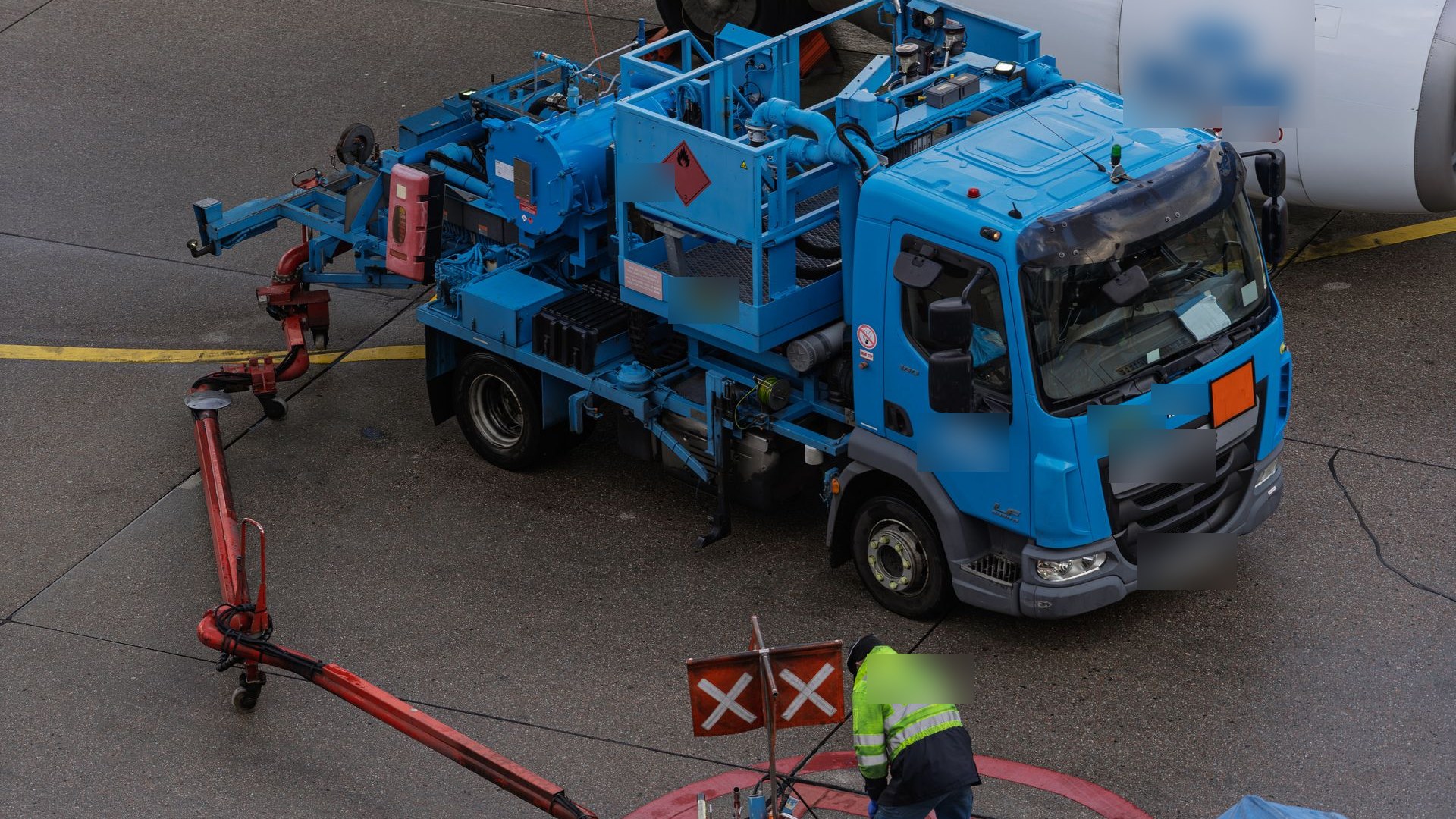
If an air freight quote from China or Hong Kong has jumped since the middle of the year, the base rate is only part of the story. The fastest-moving line on many air cargo bills right now is the fuel surcharge, and it is moving because jet fuel has become far more expensive.
On 29 October, the International Air Transport Association (IATA) said in its September air cargo report that jet fuel prices rose 17.5% in a single month and were 103.4% higher than a year earlier. “Jet fuel prices have more than doubled compared with a year ago, and yields have not kept pace,” said Marie Owens Thomsen, IATA’s chief economist. In plain words, airlines are carrying more cargo but earning less on each kilo after paying for fuel, so they are passing more of that cost to shippers through surcharges.
This guide explains how air cargo fuel surcharges work, what they add to a real shipment, and what e-commerce sellers, small importers, parcel senders and airline staff can do about it.
What the latest numbers say
IATA’s September figures show a busy market with rising costs:
- Global air cargo demand rose 7.7% year on year, while capacity rose only 2.7%.
- African airlines carried 4.7% more cargo than a year earlier, even though their capacity fell 1.2%. Their load factor, the share of available cargo space actually used, rose to 47%.
- The Africa–Asia trade lane grew 2.6%, its first month of growth after a decline.
- Middle East-linked lanes kept shrinking, with Europe–Middle East traffic down 18% and Middle East–Asia down 10.2%. Many West African shipments from Asia connect through Gulf hubs, so this is worth watching.
More demand, tight capacity on some routes and doubled fuel costs are the mix that pushes surcharges up.
What a fuel surcharge actually is
A fuel surcharge is an extra charge per kilo that an airline adds on top of the base freight rate. It moves with a published jet fuel price, so airlines do not have to renegotiate every contract each time fuel changes.
Most airlines use a simple table. They watch a jet fuel benchmark, such as the Singapore jet fuel price or IATA’s regional jet fuel price, and each price band has a fixed surcharge per kilo. When fuel moves into a higher band, the surcharge steps up. A few points matter for shippers:
- It is charged on chargeable weight, not just actual weight. For light, bulky cargo, airlines charge by volume (usually 6,000 cubic centimetres counted as 1 kg). A carton of clothes or plastic goods can be billed far heavier than it weighs, and the fuel surcharge rises with it.
- Long-haul costs more than short-haul. Africa is in the long-haul group for most Asian carriers, so shipments to Lagos pay the higher rate.
- It changes often. Some airlines review it monthly, some twice a month and some weekly when fuel is very high.
- The date that counts is the air waybill date. The surcharge on the day your air waybill (the air cargo contract and receipt) is issued is usually the one that applies.
Real examples from 1 November
Here is what some published tables show this month. These are airline-to-agent surcharges, so your forwarder’s all-in rate may present them differently.
- Cathay Cargo, from Hong Kong: the long-haul fuel surcharge rose from HK$13.5 to HK$14.1 per kg from 1 November, according to its customer notice, based on Singapore jet fuel prices from 8 to 22 October.
- DHL Air UK, from Hong Kong: its published table, where long-haul includes Africa, shows HK$4.30 per kg in January 2026, HK$13.30 per kg for 2–8 November and HK$12.80 per kg for 9–15 November. Because fuel is above US$100 a barrel, DHL now reviews it every week instead of every month.
- From Japan: JAL Cargo set its long-haul surcharge, which covers Africa, at ¥199 per kg from 1 November, based on an average jet fuel price of US$175.44 a barrel in early October.
The DHL table makes the point clearly: the same long-haul kilo from Hong Kong carries roughly three times the fuel charge it did in January.
What it adds to a typical shipment
Take a simple example. You are bringing in 100 kg of chargeable weight of phone accessories from Hong Kong by air. At HK$12.80 per kg, the fuel surcharge alone is HK$1,280. With the Hong Kong dollar pegged at about 7.8 to the US dollar, that is roughly US$164, before the base freight rate, security charges, handling at the destination airport, customs duty and delivery.
At January’s rate of HK$4.30 per kg, the same 100 kg would have carried about HK$430 in fuel surcharge. That difference lands on your landed cost, and on your selling price.
Now imagine those 100 kg are actually 60 kg of light, bulky goods that measure 100 kg by volume. You pay the surcharge on the 100 kg, not the 60. Packing well is now worth real money.
How to keep the fuel surcharge under control
- Ask for an itemised quote. Request the base rate, fuel surcharge, security surcharge and destination charges separately, and ask which date’s surcharge applies.
- Cut volumetric weight. Ask suppliers to remove bulky retail packaging, use right-sized cartons and avoid half-empty boxes. Every kilo of chargeable weight you remove also removes its fuel surcharge.
- Consolidate. One larger shipment usually costs less per kilo than several small ones, and fixed charges are spread across more goods.
- Move non-urgent goods to sea. If stock can wait a few weeks, sea freight by LCL (less than container load, where you share a container) or a full container usually costs far less per kilo. Keep air for urgent, high-value or seasonal items.
- Time your booking. Surcharges move up and down in steps. If you can plan a few days ahead, ask your forwarder whether a change is coming.
- Build a buffer into prices. E-commerce sellers should review prices for air-shipped stock more often while fuel stays high, so margins do not quietly disappear.
What this means for different readers
- E-commerce sellers and small businesses: air-shipped stock now carries more fuel cost per kilo. Check your margins on light, bulky items first.
- Individuals sending or receiving parcels: courier rates also include fuel surcharges that change regularly, so the price you were quoted last month may not hold this month.
- Airline, handling and forwarding staff: customers will ask why quotes keep changing. Being able to explain the fuel table and chargeable weight builds trust.
- Students and new logistics staff: this is a live lesson in how fuel prices flow through to freight bills, and why pricing in logistics changes so often.
How Septmax can help
Septmax Logistics arranges air and sea freight from China to Nigeria, customs clearance and door-to-door delivery. We can show you the full cost of an air shipment, compare it with sea freight, and help you pack and consolidate so you pay for fewer kilos. Call us on +234-707-476-0270 or email logistics@septmax.com.

One thought on “Jet Fuel Has Doubled: How Air Cargo Fuel Surcharges Work and What They Add to Your Shipment”