
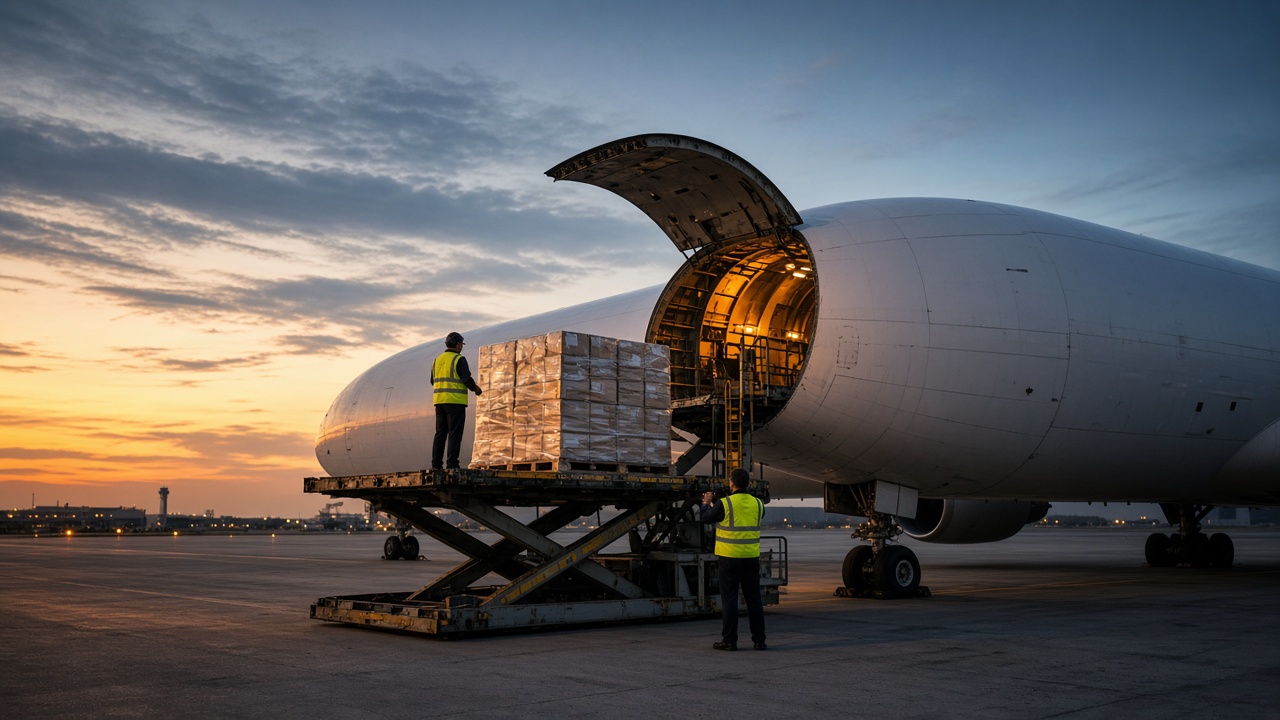
China supplies a huge share of the goods Nigerian businesses import, from machinery and building materials to electronics and spare parts. Yet many importers, especially SMEs, still get caught out by delays, surprise charges or paperwork problems that could have been avoided. Here’s what you need to know.
Air or Sea: Which Should You Choose?
Sea freight is the usual choice for heavy, bulky or high-volume cargo. You can ship a full container (FCL – 20ft or 40ft) or share space in a consolidated container (LCL) if you only have a few cubic metres.
Air freight is best for urgent, high-value or lightweight goods such as phones, samples, documents, fashion items and small spare parts. It costs much more per kilo, but your goods arrive in days, not weeks.
Somewhere in between? LCL sea freight is often a good middle ground.
How Long Does It Take?
Transit times change with the carrier, the routing and conditions at the port, so always treat them as estimates:
- Sea freight (port to port): typically around 35–50 days from major Chinese ports such as Shenzhen, Guangzhou (Nansha), Shanghai or Ningbo to Lagos (Apapa or Tin Can Island). Services from southern China are often quicker. Routings that tranship through hub ports can take longer.
- Air freight (airport to airport): often around 3–8 days into Lagos (LOS), depending on the airline and connections.
Remember that arrival is not delivery. Berthing queues, customs examination, terminal processes and Lagos traffic can add days or even weeks before goods reach your warehouse. For sea cargo, it is wise to plan for roughly two months door to door, especially in peak season.
What Drives Your Shipping Cost?
There is no single “price” from China to Nigeria. Freight rates move with the market. These are the main factors that affect your final bill:
- Mode and volume: FCL is priced per container, LCL per cubic metre (CBM), and air per chargeable kilo.
- Chargeable weight (air): airlines charge on actual weight or volumetric weight, whichever is higher. For standard air cargo, volumetric weight is usually length × width × height (cm) ÷ 6,000, so bulky, light items can cost more than you expect. Courier/express services often use a different divisor, so check your quote.
- Origin port and routing: direct services and transhipment routes are priced differently.
- Destination charges: terminal handling, shipping-line charges and, for LCL, deconsolidation fees at the container freight station are often not included in an origin quote.
- Duties and taxes: these depend on your goods’ HS code and customs value.
- Delays: demurrage and storage charges build up quickly when cargo sits at the port.
Tip: Always ask for an “all-in” or door-to-door quote, and check exactly what is and isn’t included before you pay your supplier.
Documents You Will Need
Getting your paperwork right before the goods ship is the biggest factor in a smooth clearance. Common requirements include:
- Company registration (CAC) and an active Tax Identification Number (TIN)
- Form M, opened through your Authorised Dealer Bank on the Nigeria Single Window before shipment
- Proforma invoice from your supplier (to open Form M) and, later, the final commercial invoice
- Marine insurance certificate from a Nigerian insurer. Nigerian law requires imports to be insured locally, and an electronic certificate is part of Form M processing.
- Packing list
- Bill of Lading (sea) or Air Waybill (air)
- SONCAP certificates for SON-regulated products, or NAFDAC approval for food, drugs, cosmetics and similar items
- PAAR (Pre-Arrival Assessment Report) from the Nigeria Customs Service, which is used for duty assessment and clearance
Since March 2026, SON requires SONCAP and import permit processes, including certificate activation for Form M and PAAR, to be handled on the National Single Window platform. Make sure your profile there is up to date.
Common Pitfalls (and How to Avoid Them)
- Shipping before Form M is approved. This can cause serious clearance problems. Wait for approval before your supplier ships.
- Late PAAR applications. Start the PAAR process as soon as the goods ship. Don’t wait until the vessel arrives.
- Mismatched documents. The descriptions, quantities and values on your invoice, packing list, Form M and Bill of Lading must agree.
- Wrong HS code or undervaluation. Both can lead to delays, extra duty or penalties.
- Forgetting SONCAP or NAFDAC. Check whether your product is regulated before you place the order.
- Undeclared dangerous goods. Items such as lithium batteries, aerosols and some chemicals need special declaration and handling, particularly by air.
- Poor packaging and labelling. This leads to damage and mix-ups, especially in LCL.
- Unclear Incoterms. Agree with your supplier exactly who pays for what, and where.
- No plan for the last mile. Arrange trucking or onward delivery early to avoid storage charges.
Ship from China with Confidence
Shipping from China to Nigeria doesn’t have to be stressful. With the right planning, correct documents and an experienced partner on both ends, you can cut delays and avoid surprise costs.
At Septmax Logistics, we help importers choose the right mode, prepare their paperwork and move cargo from China to their door in Nigeria. Contact our team today to discuss your next shipment and get a quote tailored to your cargo.


One thought on “Shipping from China to Nigeria: A Practical Guide for Importers (Air vs Sea, Timelines, Costs and Documents)”