China remains one of the most popular sources of goods for Nigerian businesses, and most suppliers are genuine. But a bad supplier, a wrong specification or a rushed payment can cost you more than any freight bill. The steps below help you buy with more confidence, long before your goods reach the port.
Step 1: Verify the supplier
A good-looking website or a fast-replying sales agent is not proof of a real business. Before you pay anything:
- Ask for the business licence. Every registered Chinese company has an 18-character Unified Social Credit Code. You can check the registered name, status, address and business scope on China’s official National Enterprise Credit Information Publicity System (gsxt.gov.cn). The site is in Chinese, so a translator or your forwarder’s China team can help.
- Check that the names match. The company on the licence, your contract, the proforma invoice and the bank account you pay should be the same.
- Find out if it is a factory or a trading company. Both can be fine, but you should know who is actually making your goods.
- Ask for a live video call of the factory floor or warehouse, or arrange a factory audit through an independent inspection company for larger orders.
- Start small with a new supplier before placing a large order.
Step 2: Get samples and agree the specification
Samples protect you from receiving something different from what you saw online.
- Pay for proper samples, made from the same materials and process as your order, not a “showroom” piece.
- Write down the specification: materials, dimensions, colours, weight, packaging, labels and any certificates you need.
- Keep a “golden sample”. Once you approve a sample, ask the supplier to keep a matching one so both sides can compare it with the finished goods.
- Check regulatory needs at this stage. If your product needs SONCAP, NAFDAC or another approval, the supplier may need to provide test reports or documents. Our guide to regulated products and import permits explains what to check.
Step 3: Use safer payment terms
How you pay decides how much risk you carry.
- Avoid paying 100% upfront to a new supplier where you can. Many buyers pay a deposit to start production and the balance after inspection.
- Pay only into the company’s own business account, in the same name as the licence and contract. Be wary of requests to pay a personal account or a “partner company”.
- Watch out for changed bank details. If an email suddenly says the supplier’s account has changed, confirm by phone or video with someone you already know before paying.
- Consider protected payment options. On Alibaba.com, for example, orders placed and paid through its Trade Assurance service come with order protection, but this does not cover payments made outside the platform. For larger orders, a letter of credit through your bank adds more security.
- Follow Nigerian banking rules. If you are paying through the official channel, your Form M and other bank requirements need to be in place first.
Your Incoterms should also be agreed in writing, so you know exactly where the supplier’s responsibility ends and yours begins.
Step 4: Inspect before you pay the balance
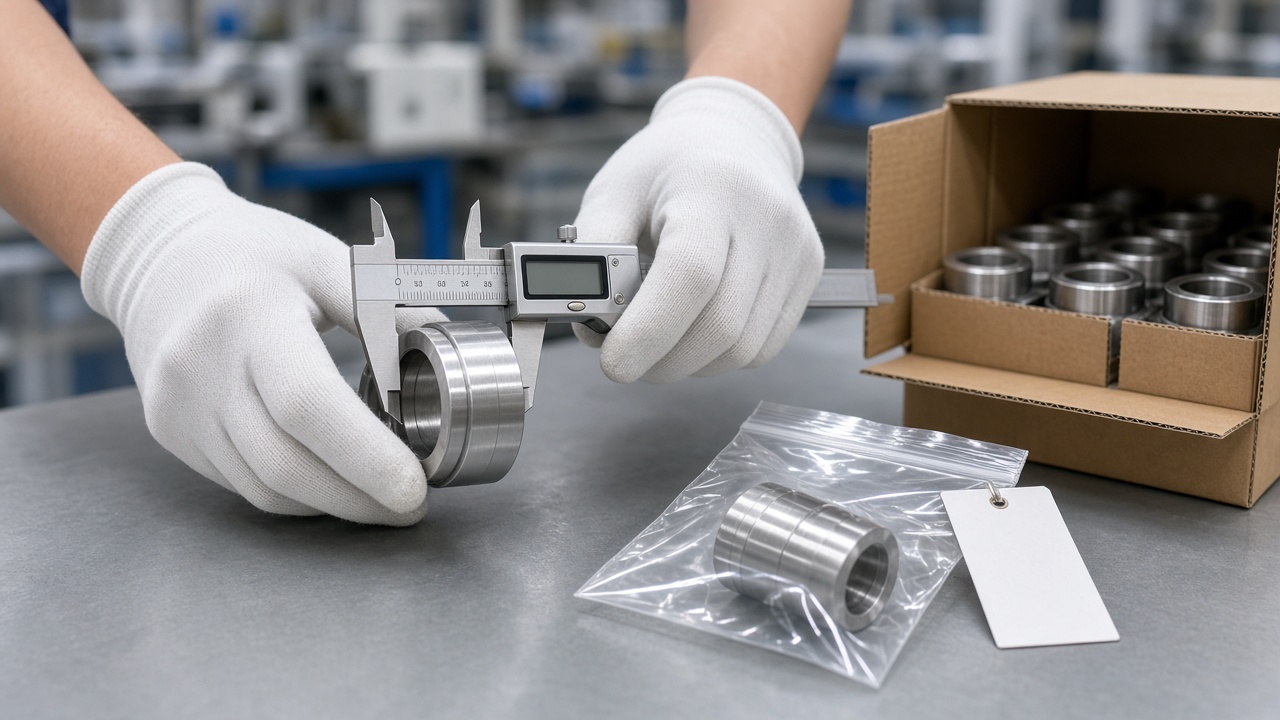
Once goods leave China, fixing problems becomes slow and expensive. A pre-shipment inspection by an independent inspection company checks your goods before they ship.
- During-production inspection can catch problems early on large or complex orders.
- Final random inspection is usually done when production is complete and most goods are packed. Inspectors check a random sample using recognised sampling standards (such as ISO 2859-1 AQL tables) against your approved sample and specification.
- Make inspection a condition of payment. Put it in your contract that the balance is paid only after the goods pass, and that the supplier must fix and re-inspect at their own cost if they fail.
This quality inspection is separate from SONCAP, which checks that regulated goods meet Nigerian standards.
Step 5: Consolidate your cargo in China
If you buy from several suppliers, you don’t have to ship each order separately. With consolidation, each supplier delivers to your forwarder’s warehouse in China. The goods are received, counted, checked for visible damage, labelled and then shipped together by sea or air. This can:
- reduce the number of separate shipments and documents
- let you combine small orders into one LCL or full container load
- give you one point of contact and one delivery in Nigeria
For more on choosing between shared and full containers, see our FCL vs LCL guide.
How a freight forwarder fits in
A forwarder with a presence in China can do much more than book space. Depending on the service, that can include receiving goods from your suppliers, checking quantities and packaging, consolidating cargo, preparing shipping documents, and then handling customs clearance and delivery in Nigeria. Getting the paperwork right in China makes clearance smoother when your goods arrive.
Buy smart, ship smart
Careful buying protects your money; careful shipping protects your timeline. Septmax Logistics offers door-to-door shipping from China to Nigeria, including consolidation and customs clearance. To plan your next order with your suppliers and shipping in one place, contact our team.