
Every container that lands in Apapa and every parcel that leaves Lagos passes through many hands: documentation officers, clearing agents, warehouse staff, dispatchers, cargo handlers and supply chain planners. That makes logistics one of the few industries where a school leaver, a graduate in almost any discipline or a career changer can find a real way in.
The hard part is knowing where to start. This guide explains the common entry roles, the professional bodies and certifications that actually exist in Nigeria, and practical ways to build experience before and after you graduate.
Entry roles where most people start
Most people in freight forwarding and supply chain started in one of these roles:
- Documentation assistant: preparing and checking invoices, packing lists, bills of lading and air waybills.
- Clearing or field assistant: working under a licensed customs agent at ports and cargo terminals, following shipments through examination and release.
- Operations assistant: tracking containers and flights, booking space and updating customers.
- Warehouse or inventory assistant: receiving, counting, labelling, picking and packing goods.
- Dispatch coordinator: planning truck trips and delivery paperwork.
- Procurement assistant: raising orders and following up suppliers for a manufacturer or retailer.
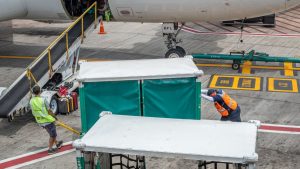
- Air cargo handler: working with airlines or ground handlers at cargo terminals.
The rules that shape freight forwarding and customs careers
Two laws matter most if you want to work in freight forwarding or customs clearance in Nigeria.
Freight forwarding is a regulated profession. Under section 13 of the CRFFN Act, an individual can qualify for registration with the Council for the Regulation of Freight Forwarding in Nigeria (CRFFN) in several ways, including approved training plus a certificate of experience and at least five years of practical work in an approved freight forwarding establishment, passing a Council-approved qualifying examination with prescribed practical training, or holding an approved degree in transport or maritime studies and passing approved professional examinations. Applicants must also be at least 21, of good character and free of any conviction for fraud or dishonesty. See also our guide on checking a forwarder’s CRFFN licence.
Lodging customs declarations for others requires a licence. Section 106 of the Nigeria Customs Service Act 2023 says nobody may, for payment, make entries or lodge goods declarations for another person unless licensed under the Act. A person cannot hold that licence if they have been convicted of a customs or other criminal offence in the past 10 years, are not a registered member of an approved freight forwarding association, or are not a Nigerian citizen. A guarantee must also be provided before licensing, and the Service is required to keep a registry of authorised customs representatives on its website.
In practice, most young people start by working for a licensed agent or forwarder and build the experience and qualifications for their own registration later.
Professional certifications worth knowing
Check each provider’s current admission notice for fees, dates and entry rules before you apply.
FIATA Diploma through CRFFN-accredited institutions
FIATA is the world federation of freight forwarders, and CRFFN is its member for Nigeria. According to CRFFN, Nigeria was accredited by FIATA in 2012 and 2013 to run the Diploma in Freight Forwarding and Supply Chain Management and the Higher Diploma in Supply Chain Management through accredited institutions. CRFFN also offers a six-month certificate course for people who do not yet meet the diploma’s entry requirements. FIATA says its Diploma in Freight Forwarding covers 15 modules, including multimodal transport, air transport, customs procedures and digital operations.
One example of an accredited provider is the Institute of Maritime Studies, University of Lagos, which advertises a professional certificate, a one-year international diploma in freight forwarding and supply chain management, and an international higher diploma.
CILT Nigeria
The Chartered Institute of Logistics and Transport (CILT) offers internationally recognised qualifications. CILT International says you need no professional experience or qualifications to join as a Student or Associate member. CILT Nigeria lists an International Certificate (Level 3), an International Diploma (Level 5) and an International Advanced Diploma (Level 6). The Diploma plus at least two years of relevant experience meets the requirement for upgrade to Member (MILT), while the Advanced Diploma with appropriate experience leads towards Chartered Member (CMILT). CILT Nigeria’s membership page adds that an HND or BSc in a transport-related field can also qualify you for full membership.
CIPS for procurement and supply
If you lean towards buying, sourcing and supplier management, look at the Chartered Institute of Procurement and Supply. CIPS describes its Level 2 Certificate as ideal for people just starting out, and its Level 4 Diploma as the entry point for people with two or more years of business experience, leading through Levels 5 and 6 to chartered status (MCIPS). CIPS lists computer-based exam centres in Lagos and Abuja.
NITT Zaria
The Nigerian Institute of Transport Technology runs a Postgraduate Diploma in Transport and Logistics with Ahmadu Bello University, open to holders of a degree outside transport or an HND, over 12 months full-time or 24 months part-time. For school leavers, its 12-month Certificate in Transport and Logistics accepts four O-level credits including Maths and English. NITT also runs short courses on topics such as warehousing operations and cold chain logistics.
IATA training for air cargo
If you want to work in air freight, the IATA Dangerous Goods Regulations course for general cargo accepting and processing personnel is aimed at freight forwarders, airline and ground handling staff who process general cargo.
If you want to work at sea
Seafaring is a separate path built on maritime training, sea time and a Certificate of Competency (CoC). The Maritime Academy of Nigeria, Oron admits National Diploma students through JAMB/UTME only, for two-year programmes such as Nautical Science and Marine Engineering, and offers HNDs including Maritime Transport and Business Management.
NIMASA’s Nigerian Seafarers Development Programme has sponsored 2,459 cadets for training abroad, of whom 1,088 have obtained their CoC, according to the Minister of Marine and Blue Economy in April 2026. In October 2026, the Ijaw Youth Council said more than 100 cadets sent to the Philippines between 2012 and 2014 were still waiting to complete their CoC requirements. Plan for sea time and certification from day one, and ask any programme how and when it will place you on a vessel.
Skills employers look for
Certificates help, but day-to-day work in logistics rewards practical habits:
- Accuracy: one wrong HS code, weight or consignee name can hold up a shipment.
- Spreadsheets: tracking shipments, costs and stock in Excel or Google Sheets.
- Trade basics: Incoterms, HS codes, container types, bills of lading and air waybills.
- Online systems: customs and port processes in Nigeria are increasingly digital.
- Communication and problem-solving: delays and missing documents are part of the job.
- Integrity: you will handle valuable cargo, money and sensitive information.
How to get experience while you study
- Use SIWES well. The Industrial Training Fund’s Students Industrial Work Experience Scheme places students of universities, polytechnics and colleges in real workplaces. Ask your coordinator for a forwarder, shipping company, warehouse, airline cargo unit or manufacturer’s supply chain department.
- Ask for short attachments with small forwarders and clearing agents.
- Start a student membership. CILT and CIPS student routes give you learning resources and a network early.
- Shadow the documentation desk and note how a shipment moves from booking to delivery.
- Keep records of your SIWES, internships and courses, because professional registrations often ask for proof of experience.
Talk to us
Septmax Logistics works every day across air and sea freight, customs clearance and China-Nigeria door-to-door shipping. If you are a student or graduate with questions about how the industry works, or a business that needs a reliable logistics partner, reach us on +234-707-476-0270, email logistics@septmax.com or visit septmax.com.